
Microarray Technique
Microarray Technique: Principle, Types, Procedure, and Applications
Introduction to Microarray Technique
The Microarray Technique is a powerful molecular biology method used to analyze the expression of thousands of genes simultaneously. It allows scientists to study gene activity, detect mutations, and understand complex biological processes at a genomic level.
This technique is widely used in genomics, diagnostics, drug discovery, and personalized medicine, making it a cornerstone of modern biotechnology.
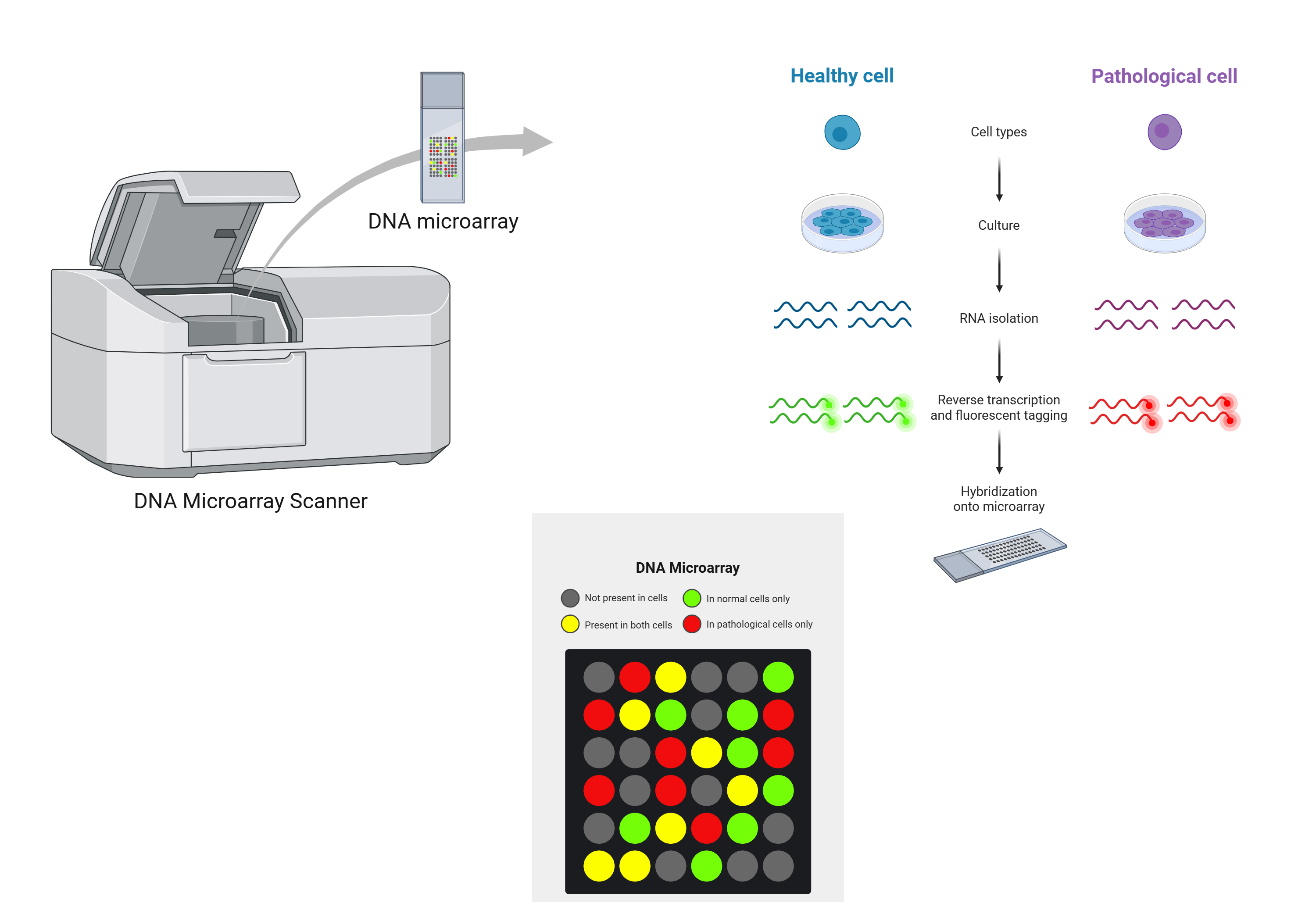
What is Microarray Technique?
The Microarray Technique involves the use of a solid surface (usually a glass slide) onto which thousands of DNA probes are fixed in an organized grid.
Each spot on the array contains a specific DNA sequence that can hybridize with complementary DNA from a sample.
Principle of Microarray Technique
The Microarray Technique is based on the principle of nucleic acid hybridization:
- Complementary DNA strands bind together
- Fluorescently labeled sample DNA binds to probes on the array
- Signal intensity reflects gene expression levels
Key concept:
More fluorescence = higher gene expression
Types of Microarray Technique
1. DNA Microarray
- Measures gene expression levels
- Compares normal vs diseased cells
2. Protein Microarray
- Detects protein interactions
- Used in biomarker discovery
3. SNP Microarray
- Identifies genetic variations
- Used in genetic screening
Components of Microarray Technique
The Microarray Technique consists of:
- DNA probes (fixed on slide)
- Target DNA/cDNA (sample)
- Fluorescent dyes
- Scanner and software
Procedure of Microarray Technique
Step 1: Sample Preparation
- Extract RNA from cells
- Convert RNA to cDNA
Step 2: Labeling
- Label cDNA with fluorescent dyes
Step 3: Hybridization
- Apply labeled sample to microarray chip
- Complementary sequences bind to probes
Step 4: Washing
- Remove unbound DNA
Step 5: Scanning
- Detect fluorescence signals
Step 6: Data Analysis
- Analyze gene expression patterns
How Microarray Technique Works
- Each gene corresponds to a specific spot on the array
- Fluorescent signals indicate binding
- Software converts signals into data
This allows comparison of thousands of genes in a single experiment.
Applications of Microarray Technique
The Microarray Technique has a wide range of applications:
1. Gene Expression Analysis
- Study upregulated and downregulated genes
2. Disease Diagnosis
- Cancer classification
- Genetic disorder detection
3. Drug Discovery
- Identify drug targets
- Study drug effects on genes
4. Personalized Medicine
- Tailor treatments based on gene profiles
5. Microbial Identification
- Detect pathogens in samples
Advantages of Microarray Technique
- High-throughput analysis
- Simultaneous study of thousands of genes
- Fast and efficient
- Requires small sample volume
Limitations of Microarray Technique
- Expensive equipment
- Requires prior knowledge of sequences
- Limited sensitivity compared to sequencing
- Data analysis can be complex
Microarray Technique vs Next-Generation Sequencing
| Feature | Microarray Technique | NGS |
|---|---|---|
| Throughput | High | Very high |
| Cost | Moderate | Higher |
| Sensitivity | Moderate | High |
| Novel gene detection | No | Yes |
Frequently Asked Questions (FAQs)
What is Microarray Technique used for?
The Microarray Technique is used to study gene expression, detect mutations, and analyze genetic variations.
What is the principle of Microarray Technique?
It is based on complementary DNA hybridization and fluorescence detection.
Is microarray still used today?
Yes, especially in diagnostics and gene expression studies, although sequencing is increasingly popular.
What are microarray chips?
They are solid surfaces containing thousands of DNA probes used for analysis.
Conclusion
The Microarray Technique revolutionized molecular biology by enabling large-scale gene analysis in a single experiment. Despite the rise of advanced sequencing technologies, it remains a valuable and widely used tool in research and diagnostics.
Understanding the Microarray Technique is essential for anyone working in genomics, biotechnology, and biomedical research.
Recent Posts
-
HyperLadder™ 1kb
MOLECULAR BIOLOGY REAGENT HyperLadder™ 1kb Ready-to-use DNA molecular weight marker for size deter …24th Aug 2026 -
How to Inactivate Proteinase K
How to Inactivate Proteinase K: Complete Guide for Molecular Biology Labs Introduction In molecular …5th May 2026 -
Western Blot System
Western Blot System: Complete Scientific Guide for Protein Detection What Is a Western Blot System? …27th Apr 2026