
Automated Stereotaxic Instrument: Principle, Features, Applications and Advantages
Automated Stereotaxic Instrument
Introduction
The Automated Stereotaxic Instrument represents a major technological advancement in neuroscience research, enabling ultra-precise brain targeting with minimal human intervention. Unlike traditional manual stereotaxic systems, this instrument integrates computer control, motorized positioning, and brain atlas software, significantly improving accuracy, reproducibility, and experimental efficiency.
It is widely used in neurosurgery, electrophysiology, optogenetics, and drug delivery studies.
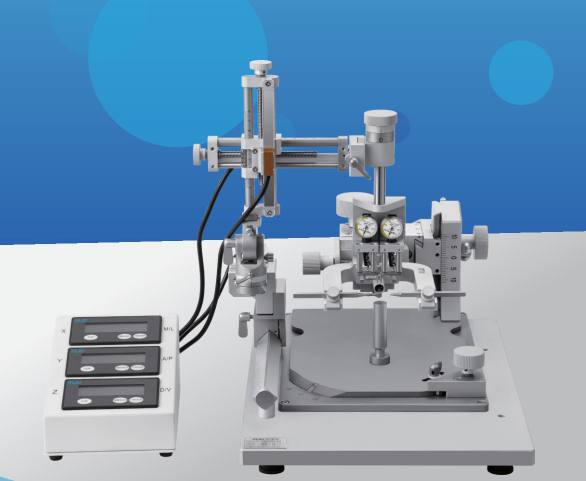
What is an Automated Stereotaxic Instrument?
An Automated Stereotaxic Instrument is a computer-controlled device designed to position probes, electrodes, or injection needles into specific brain regions using a three-dimensional coordinate system (X, Y, Z).
Instead of manual adjustments, the system uses :
- High-precision stepper motors
- Software-guided navigation
- Integrated brain atlas visualization
This allows researchers to perform complex procedures with micrometer-level precision.
Principle of Operation
The system operates using a motorized stereotactic manipulator controlled via software.
Key steps:
- The animal (mouse or rat) is fixed in the stereotaxic frame
- Reference points such as Bregma and Lambda are identified
- The software maps coordinates using an integrated brain atlas
- The manipulator moves automatically to the target location
- Injection or implantation is performed with programmed parameters
Unlike manual systems, automated devices can:
- Move to coordinates automatically
- Store multiple target positions
- Execute predefined experimental protocols
This drastically reduces human error and improves consistency.
Key Features
1. Ultra-High Precision (1 µm Resolution)
- Motorized positioning with 1 micrometer accuracy
- Stable and repeatable movements
2. Computer-Controlled System
- Fully automated movement via software
- Multiple control modes (PC, keyboard, micromanipulator)
3. Integrated Brain Atlas
- Real-time visualization of probe position
- Faster and more accurate targeting
4. Automated Procedures
- Skull window (craniotomy)
- Tissue removal
- Automated injection programs
5. No Need for Manual Skull Leveling
- Atlas-based calibration eliminates alignment complexity
6. Multi-Point Injection Capability
- Program multiple injection sites (up to 10 points)
- Ideal for complex brain studies
7. Anti-Collision & Safety System
- Prevents accidental damage to brain tissue
- Enhances animal safety during procedures
Components of the System
Typical components include:
- Base stereotaxic frame
- Motorized manipulator (single or dual arm)
- Control software (with brain atlas)
- Injection module (nanoliter pump)
- Ear bars and animal adaptors
- Optional tissue removal and drilling tools
Applications
Neuroscience Research
- Brain mapping and neural circuit analysis
- Functional studies of specific brain regions
Drug Delivery
- Precise intracranial injections
- Viral vector delivery
Optogenetics & Electrophysiology
- Implantation of electrodes and optical fibers
Disease Models
- Parkinson’s disease
- Alzheimer’s disease
- Epilepsy research
Behavioral Studies
- Learning, memory, and addiction research
Advantages Over Manual Systems
Higher Accuracy
- Micrometer-level precision vs manual variability
Reduced Human Error
- Automated positioning eliminates miscalculations
Time Efficiency
- Faster setup and execution
High Reproducibility
- Standardized protocols across experiments
Advanced Automation
- Multi-step procedures executed automatically
Automated vs Digital vs Manual Stereotaxic Systems
| Feature | Manual | Digital | Automated |
|---|---|---|---|
| Control | Manual | Digital readout | Software-controlled |
| Precision | Moderate | High | Ultra-high (1 µm) |
| Automation | ❌ | ❌ | ✅ |
| Brain Atlas Integration | ❌ | ❌ | ✅ |
| Error Reduction | Low | Medium | Very High |
| Throughput | Low | Medium | High |
Why Choose an Automated Stereotaxic Instrument?
If your lab focuses on:
- High-throughput experiments
- Complex multi-site injections
- Advanced neuroscience techniques
Then an automated system is essential for achieving:
Precision + Efficiency + Reproducibility
Conclusion
The Automated Stereotaxic Instrument is a next-generation solution for modern neuroscience. By combining robotic precision, software intelligence, and atlas-guided targeting, it allows researchers to perform complex brain procedures with unmatched accuracy and consistency.
It is no longer just an upgrade it is becoming a standard tool in advanced research laboratories.
Recent Posts
-
HyperLadder™ 1kb
MOLECULAR BIOLOGY REAGENT HyperLadder™ 1kb Ready-to-use DNA molecular weight marker for size deter …24th Aug 2026 -
How to Inactivate Proteinase K
How to Inactivate Proteinase K: Complete Guide for Molecular Biology Labs Introduction In molecular …5th May 2026 -
Western Blot System
Western Blot System: Complete Scientific Guide for Protein Detection What Is a Western Blot System? …27th Apr 2026