Next Generation Sequencing Workflow: Complete Scientific Guide for Fast Results
Next Generation Sequencing Workflow: Complete Scientific Guide for Fast Results
What Is Next Generation Sequencing Workflow?
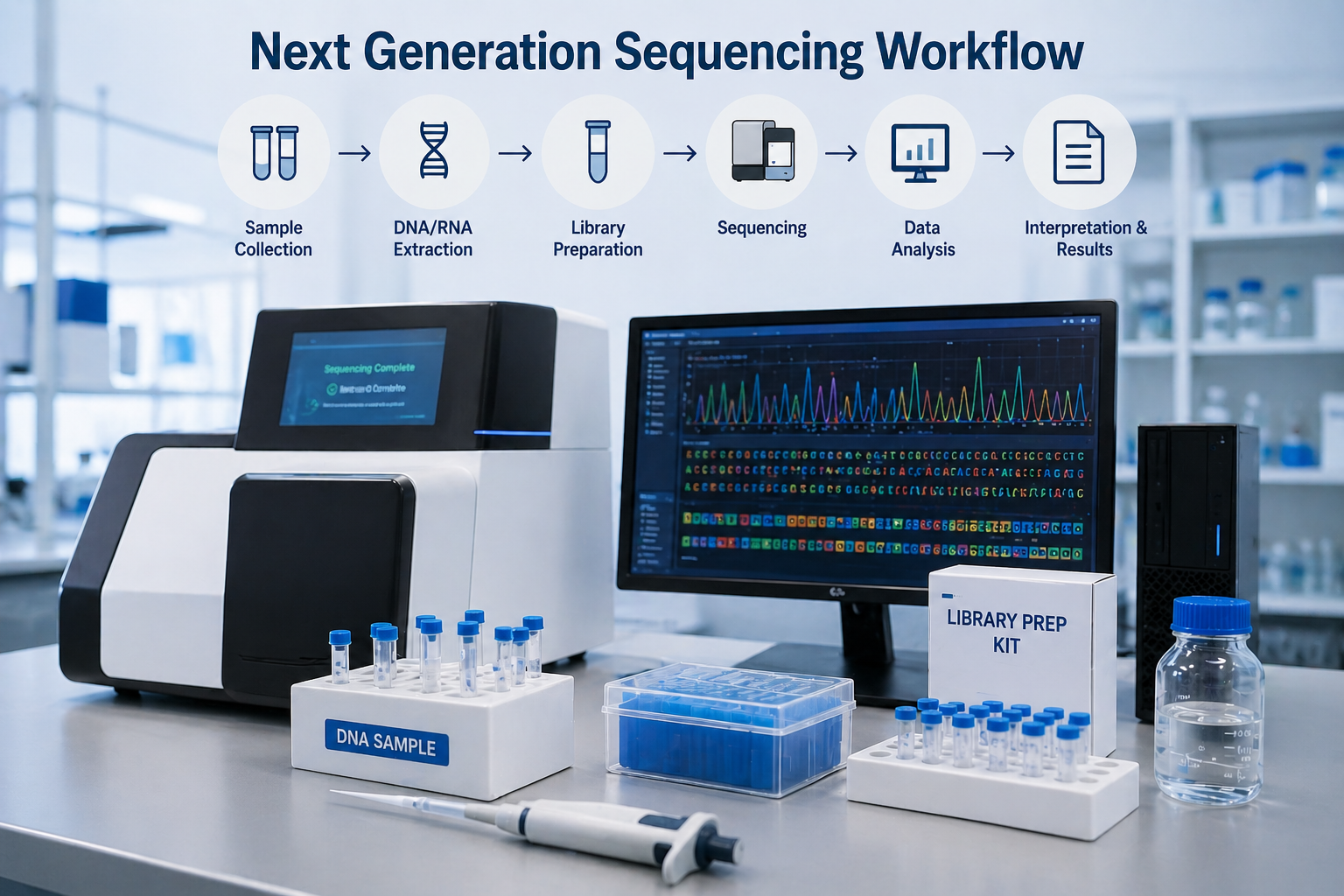
The next generation sequencing workflow is a step-by-step laboratory and bioinformatics process used to analyze DNA or RNA rapidly and accurately. It allows researchers to sequence millions of fragments simultaneously, making it essential in genomics, cancer research, microbiology, agriculture, and personalized medicine.
Modern laboratories rely on a structured next generation sequencing workflow to ensure reliable sequencing data, reduce contamination risk, and improve turnaround time.
Why Is the Next Generation Sequencing Workflow Important?
A well-designed next generation sequencing workflow helps scientists:
- Detect genetic mutations
- Study microbial communities
- Analyze gene expression
- Identify inherited diseases
- Support cancer diagnostics
- Accelerate drug discovery
Because sequencing technology generates massive data volumes, every stage of the workflow must be optimized.
Main Steps in Next Generation Sequencing Workflow
1. Sample Collection and Nucleic Acid Extraction
The first stage of the next generation sequencing workflow begins with collecting biological material such as:
- Blood
- Tissue
- Saliva
- Bacteria cultures
- Environmental samples
DNA or RNA is then extracted using purification kits or automated extraction systems. High purity nucleic acids are critical for sequencing success.
2. Quality Control of DNA or RNA
Before library preparation, scientists evaluate sample quality using:
- Spectrophotometry
- Fluorometry
- Agarose gel electrophoresis
- Bioanalyzer systems
Poor quality samples can lead to failed sequencing runs.
3. Library Preparation
Library preparation is one of the most important parts of the next generation sequencing workflow.
This step includes:
- DNA fragmentation
- End repair
- Adapter ligation
- Index/barcode addition
- PCR amplification (optional)
Adapters allow fragments to bind to the sequencing instrument flow cell.
4. Library Quantification and Validation
Prepared libraries must be measured accurately. Common tools include:
- qPCR systems
- Fluorometric quantification
- Fragment analyzers
Correct concentration ensures balanced cluster generation and optimal read density.
5. Sequencing Run
Libraries are loaded into the sequencer. Popular platforms include:
- Illumina systems
6. Bioinformatics Analysis
Raw data must be converted into useful biological information.
Typical analysis steps:
- Base calling
- Quality filtering
- Read trimming
- Alignment to reference genome
- Variant calling
- Annotation
- Expression analysis
Bioinformatics is often the longest part of the next generation sequencing workflow.
7. Data Interpretation and Reporting
Scientists review final results and create reports for research or clinical use.
Examples:
- Mutation reports
- Pathogen identification
- Tumor profiling
- Gene expression summaries
Types of Next Generation Sequencing Workflow
Different applications require different workflows.
Whole Genome Sequencing
Sequences the complete genome.
Whole Exome Sequencing
Targets coding regions only.
RNA Sequencing
Studies transcript expression.
Targeted Sequencing
Analyzes selected genes or panels.
Metagenomic Sequencing
Examines mixed microbial populations.
Challenges in Next Generation Sequencing Workflow
Although powerful, the next generation sequencing workflow may face issues such as:
- Low sample quality
- Library bias
- PCR duplicates
- Sequencing errors
- Data storage limitations
- Complex interpretation
Strong QC and validated protocols minimize these risks.
How to Optimize Next Generation Sequencing Workflow
For best results:
- Use high-quality extraction kits
- Maintain contamination-free workspace
- Validate library size distribution
- Use calibrated instruments
- Apply trusted bioinformatics pipelines
- Include positive and negative controls
Future of Next Generation Sequencing Workflow
Sequencing continues to become faster, cheaper, and more accurate. Emerging trends include:
- Real-time sequencing
- Portable instruments
- AI-based variant interpretation
- Single-cell sequencing
- Ultra-long reads
These innovations will further improve the next generation sequencing workflow in research and healthcare.
Final Thoughts
The next generation sequencing workflow is the backbone of modern genomics. From sample preparation to data analysis, each step influences final accuracy. Laboratories that optimize every stage gain faster insights, better reproducibility, and stronger scientific outcomes.
Whether for cancer research, infectious disease detection, or agricultural genomics, mastering the next generation sequencing workflow is essential in today’s molecular biology landscape.