
RNase Inhibitor
Understanding RNase Inhibitors: Essential Tools for RNA Research
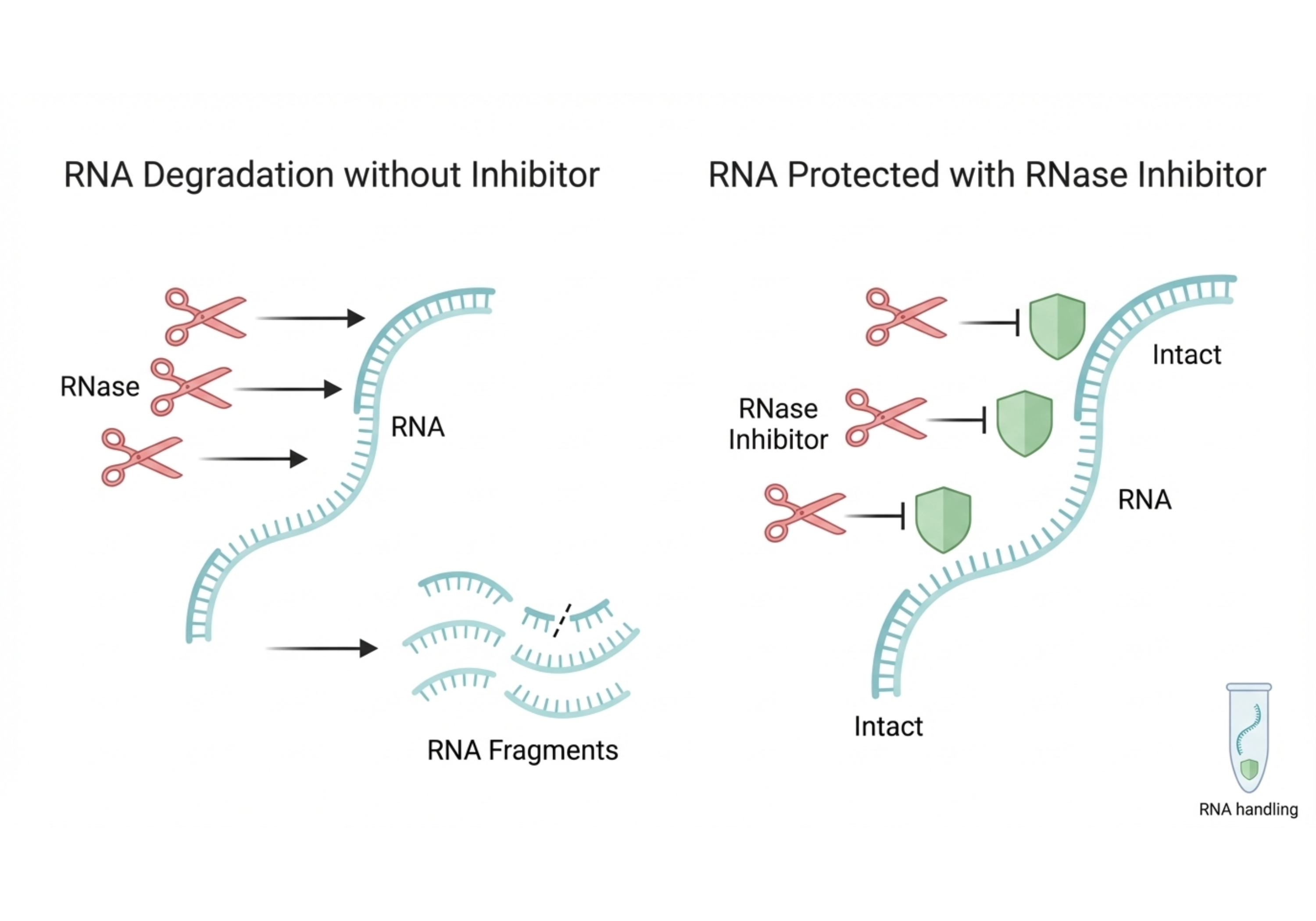
RNA molecules are notoriously unstable and highly susceptible to degradation by ribonucleases (RNases), enzymes that are ubiquitous in lab environments. Protecting RNA during extraction, amplification, or any downstream molecular biology applications is critical for reliable results. This is where RNase inhibitors become indispensable.
What Are RNase Inhibitors?
RNase inhibitors are proteins that bind to RNases and inhibit their enzymatic activity. They are commonly used in molecular biology to preserve RNA integrity during experiments such as:
Reverse transcription (RT)
RNA sequencing (RNA-Seq)
cDNA library preparation
In vitro transcription
These inhibitors are particularly crucial when working with low-abundance RNA samples, where even trace RNase activity can compromise the experiment.
Types of RNase Inhibitors
Human Placental RNase Inhibitor (HPRI):
Derived from human placenta
Highly effective against RNase A-type enzymes
Commonly used in RT-PCR and RNA protection assays
Recombinant RNase Inhibitors:
Engineered from eukaryotic sources, often expressed in E. coli
Provide high batch-to-batch consistency
Resistant to common contaminants
Chemical RNase Inhibitors:
Small molecules that inactivate RNases
Less commonly used, typically for specialized applications
How RNase Inhibitors Work
RNase inhibitors typically form a tight, non-covalent complex with RNases. This binding effectively blocks the RNase active site, preventing it from cleaving RNA molecules. Most inhibitors are specific to RNase A family enzymes, the most common RNases in laboratory settings.
Pro Tip: Always use RNase-free tips, tubes, and reagents along with inhibitors to minimize contamination. RNase inhibitors protect RNA, but cannot neutralize pre-existing RNA damage.
Applications of RNase Inhibitors
Reverse Transcription (RT): Enhances cDNA yield by preventing RNA degradation during RT reactions.
RNA Isolation and Purification: Maintains RNA integrity during extraction from tissues, cells, or biofluids.
Next-Generation Sequencing (NGS) Library Prep: Protects RNA molecules in sensitive protocols where accurate quantification is essential.
In Vitro Transcription (IVT): Essential for mRNA synthesis, including mRNA therapeutics and vaccines.
Key Considerations When Using RNase Inhibitors
-
Temperature Sensitivity: Most RNase inhibitors are sensitive to heat and lose activity above 37°C. Use them in cold conditions whenever possible.
-
Concentration Matters: Optimal inhibitor concentration varies depending on the RNA sample and protocol. Follow the manufacturer’s recommendation.
-
Storage: Store at −20°C or −80°C, and avoid repeated freeze-thaw cycles to maintain activity.
-
Compatibility: Check if your downstream enzymes (like T7 RNA polymerase or reverse transcriptase) are compatible with the inhibitor used.
Conclusion
RNase inhibitors are an essential component of RNA-based research workflows. By protecting RNA from degradation, they ensure the reliability and reproducibility of experiments, from basic RT-PCR to advanced NGS library preparation. Choosing the right inhibitor and using it correctly can make the difference between successful RNA analysis and wasted samples.